
Queens, NY
Concrete Cutting and Removal in Queens
Basement slabs, garage floors, patio slabs, driveway aprons, boiler pads and openings. Cut to a line, broken down to pieces the route out can carry, and taken out.
What concrete cutting and removal covers here
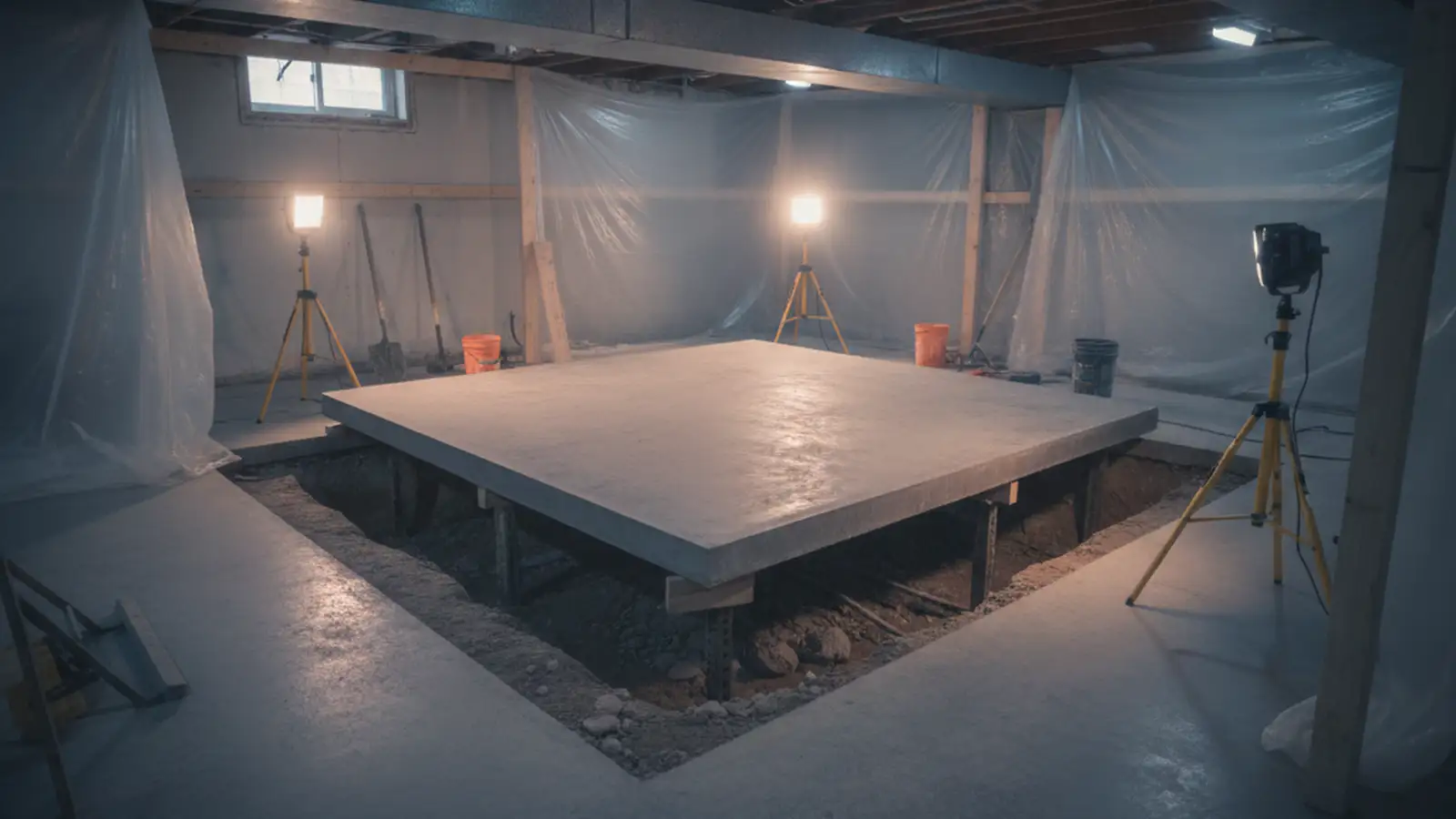
In a borough of houses, most of the concrete work is at ground level or below it. Basement slabs cut for a new drain line or a lowered floor, garage floors, patio slabs and yard paving broken out for a new layout, driveway aprons, boiler pads and the stoops and steps that go with all of it.
In the co-op towers and the commercial stock it is openings: penetrations through a slab for a new stair, a duct or a riser, trenching in a slab for services, and pads and curbs coming out ahead of a fit-out.
We work for general contractors, mechanical and electrical trades, fit-out teams and owners through their contractor. Where an opening touches structure, an engineer decides its size and its reinforcement, and the filing goes in before we cut.
01 Getting it out
Cutting is the easy half
Concrete cuts to a clean line with the right saw. The work is deciding how the pieces leave.
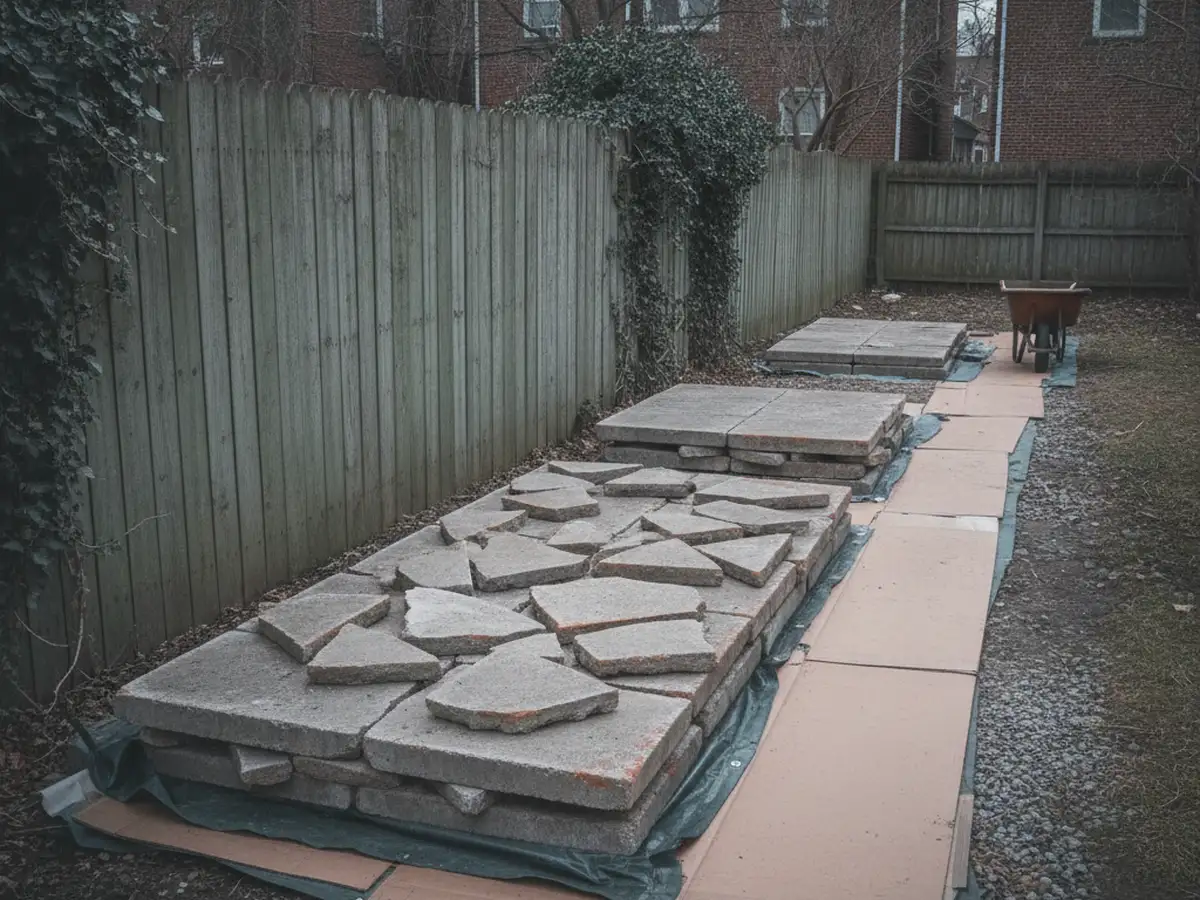
In a house that is a basement stair, a side door or a garage, and a container in the driveway, and the pieces are sized to what two people can carry up the stair. In a co-op tower it is a service elevator with a weight limit and booked windows, and the pieces are sized to the cab and the hours. In a yard it is a path over protected ground to the container and a fence panel that may need to come off.
We plan the cut backwards from that route. A slab broken into pieces nobody can lift is not progress.
Where structure is an engineer's decision
A slab on grade in a basement or a yard is not holding anything up, and cutting it is a matter of method. A suspended slab in a co-op tower or a commercial building is structure, and an opening through it is an engineer's decision: where it goes, how big it can be, what reinforcement it cuts through and what has to be added around it.
That drawing is filed with the Department of Buildings by the engineer or architect, and the permit issues before we cut. It adds time at the front of the job and it is not optional. We will tell you which kind of slab you have on the first call, so the schedule you plan against is a real one.
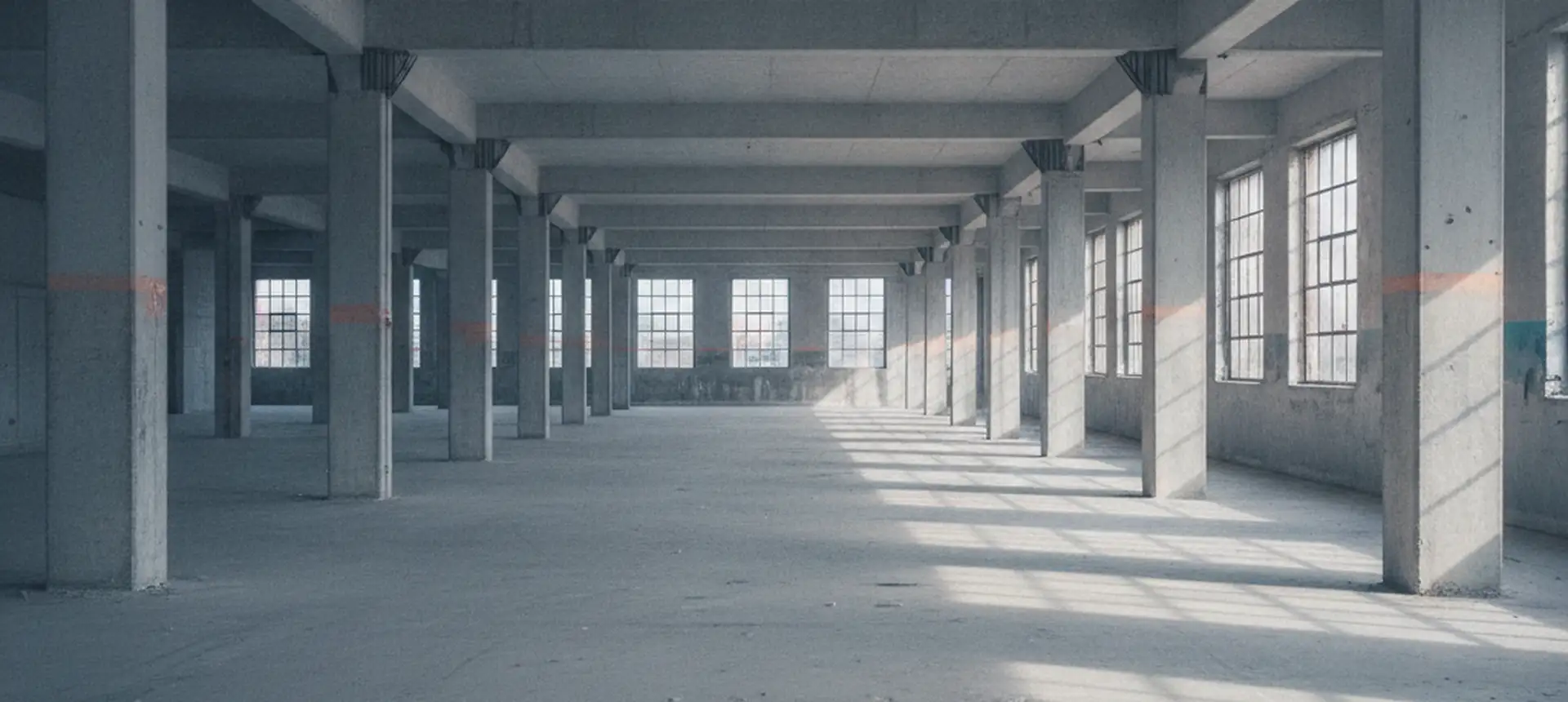
A stripped commercial floor
Working inside an occupied building
Water
Wet cutting keeps the dust down and the blade cool. In a finished house or an occupied building the water is contained and collected, not left to find its own way down.
Dust
Where wet cutting is not possible, dust is captured at the tool and the room is sealed and, where warranted, put under negative pressure. Silica dust is the reason, and it is not negotiable.
Vibration and noise
Sawing is loud and breaking is louder. Both are grouped into agreed windows, and in a co-op or an attached house the neighbours are told which days and hours before the first one.
What stays live
Drain lines, gas, electrical conduit and the neighbour's services in a shared slab are located before the saw touches it. A scan costs less than a cut pipe.
Common questions
Can you cut concrete inside an occupied building?
Yes. It is the normal case in Queens's co-op towers and in any house the family is still living in.
It changes the method rather than the possibility. Cutting is kept wet where the material and the finishes allow it, the water is contained, the room is sealed, noisy work runs in agreed hours, and the pieces leave in the elevator windows or by the stair on a schedule the building has agreed to. The managing agent and the super know the plan before the first day.
How do you keep the dust down?
Mostly with water, and where water is not possible, with capture at the tool and containment of the room.
Wet cutting suppresses most of the dust at the blade. Where the finishes or the location rule that out, the saw or breaker runs with dust extraction attached, the openings into the rest of the building are sealed, and the space is put under negative pressure where the scope warrants it. Concrete dust contains silica, so this is a health measure first and a housekeeping one second.