
Queens, NY
Residential Demolition in Queens
Two-family and detached house interiors, co-op and condo apartment gut-outs, and kitchen and bathroom strip-outs across Queens, run to the alteration agreement and the block's patience rather than around them.
What residential demolition covers here
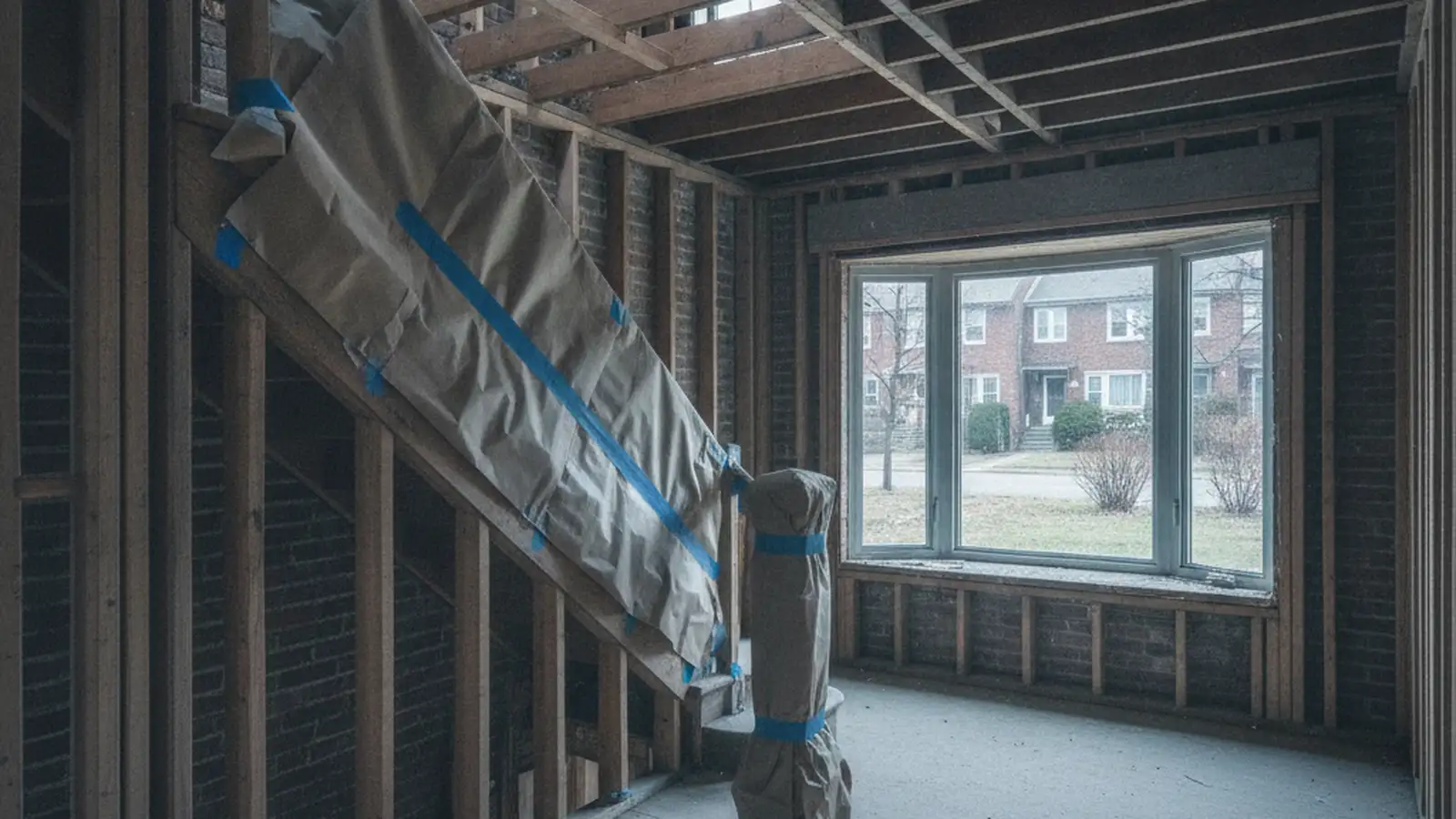
Houses, mostly. Queens is a borough of detached and attached one- and two-family houses, and taking one back to the studs, or taking a kitchen and a bathroom out of one while the family stays, is the most common residential job we do.
Beyond the houses it means co-op and condo apartment gut-outs in Forest Hills, Rego Park, Kew Gardens, Flushing and Bay Terrace, pre-war apartments in Jackson Heights and Astoria, and garden-apartment units turned over between tenants. Partitions, ceilings, floors and sleepers, kitchens and bathrooms, built-ins, and the redundant pipe and wire behind them.
On residential work we come in as the demolition trade alongside the general contractor running the renovation, and we work with the architect, the owner and the managing agent. If you are a homeowner reading this, the person to send it to is your contractor.
01 Houses
The container in the driveway
In a Queens house the route out is a driveway and a container off the street, which removes the container permit and most of the argument, and material leaves by the side or back door over protected floor.
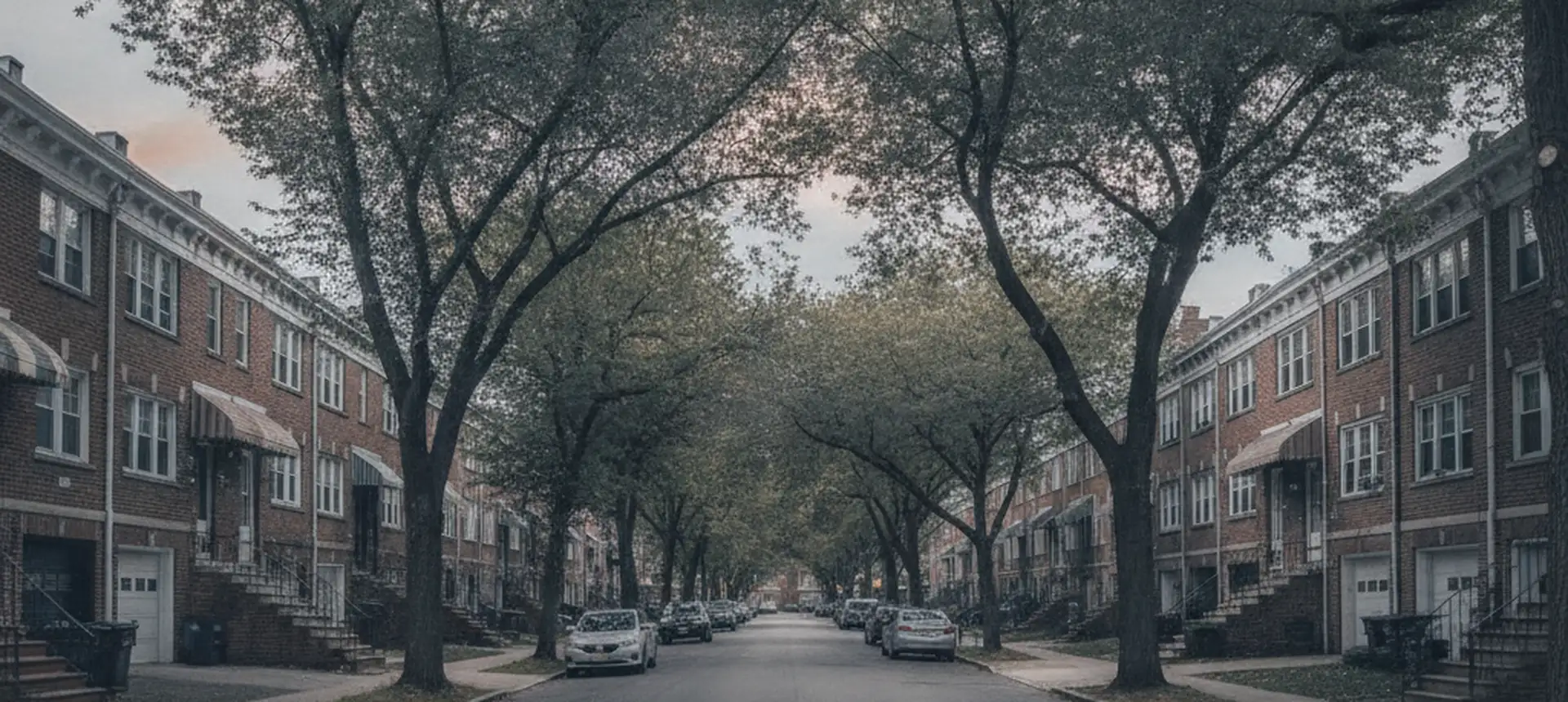
What replaces the elevator as the constraint is the neighbour. In an attached or semi-detached house they are a few feet away through a shared wall, and in a detached house they are across a driveway. The hours matter more than the route, the noisy work gets grouped, and we talk to the people next door before the first day rather than after the first complaint.
The service elevator, booked by the hour
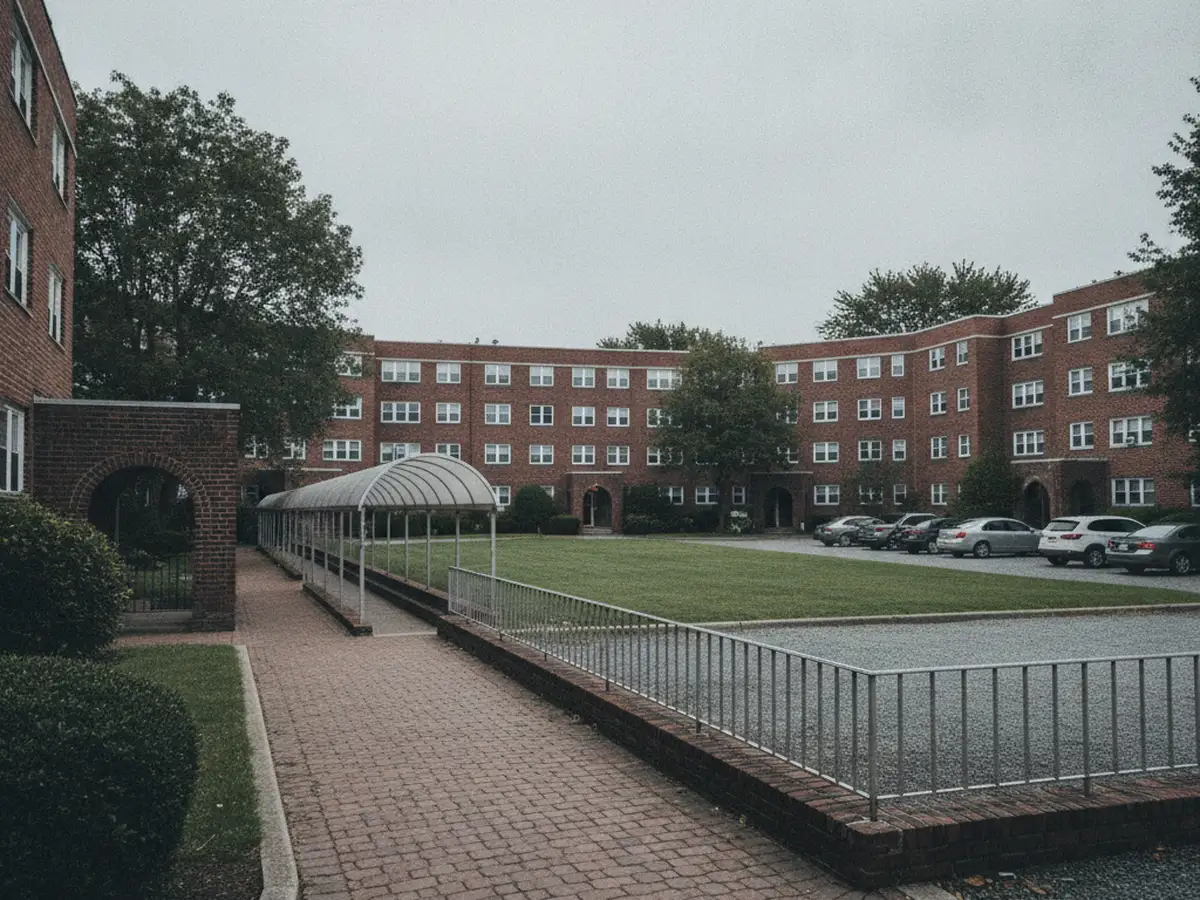
A co-op tower in Rego Park or a pre-war building in Jackson Heights is a different job from a house with the same scope on paper.
Everything leaves through the service elevator, or in a pre-war building through the one passenger elevator, in the windows management releases. The cab gets protected before the first bag rides in it. The lobby and the corridor are the only way in and out for a hundred households. The alteration agreement sets the hours, usually narrower than the city's, and the board and the managing agent have to approve the drawings, the insurance and the schedule before any of it starts.
We read the alteration agreement before we quote, because it decides the schedule more than the scope does. Where a building gives us the elevator for two hours in the morning, that limit sets the pace of the job, and we build the sequence around it.
A Queens side street
Living there while it happens
The family downstairs
In a two-family the other unit is usually occupied. Protection on the shared stair and hall, dust sealed at the doors, noisy work in agreed hours, and a clear-down every evening.
Partition or load-bearing
A partition comes out with the rest. A wall that is carrying the floor above needs an engineer's drawing and a permit before anyone touches it, and we will tell you which it is before you plan around it.
Kitchens and bathrooms
Tile on a mortar bed, cast-iron tubs, and plumbing that has to be capped live. A partial strip-out in an occupied home is a real scope and we run it as one.
What we leave behind
The space swept and clear, services capped and tagged, and a plain account of what we found behind the walls for the trades who follow.
Common questions
Will my co-op or condo board need to approve the work?
Almost certainly, yes.
Nearly every co-op and condo in Queens has an alteration agreement that the owner signs before work starts. It sets out what the board needs to see, usually drawings, the contractors' insurance certificates, a deposit and a schedule, and it sets the rules the job runs to: hours, elevator use, protection, noise and how long the work may take. Boards often meet monthly, so this can take longer than the city's permit. Start it early.
Can you take out a wall?
Yes, and the answer to what it takes depends on what the wall is doing.
A partition that divides two rooms and carries nothing comes out as part of ordinary interior demolition. A wall that is carrying the floor above, which in an older house is more common than people expect, is structural: an engineer designs the beam that replaces it, an architect or engineer files with the Department of Buildings, and the permit issues before we touch it. We will tell you honestly which one you have when we walk the space.
How much does it cost to gut renovate a house in NYC?
We can only speak for the demolition part, and there is no honest average for it.
What moves the number is how the material gets out, what the walls and floors are made of, when you can work, and what has to be protected. A drywall two-family with a container in the driveway and nobody living downstairs is the simplest case in the city. A plaster-on-lath house with the family staying and a neighbour through the wall is a larger job for the same square footage.
We price against the actual space rather than a rate per square foot, and we tell you which parts could move once the plaster is off.