
Queens, NY
Interior Demolition in Queens
We take a space back to whatever your next stage needs. Bare structure, a clean shell, or something in between, with the parts that are staying protected and untouched.
What comes out, and what stays
Interior demolition is the inside of the building coming out while the building stays up.
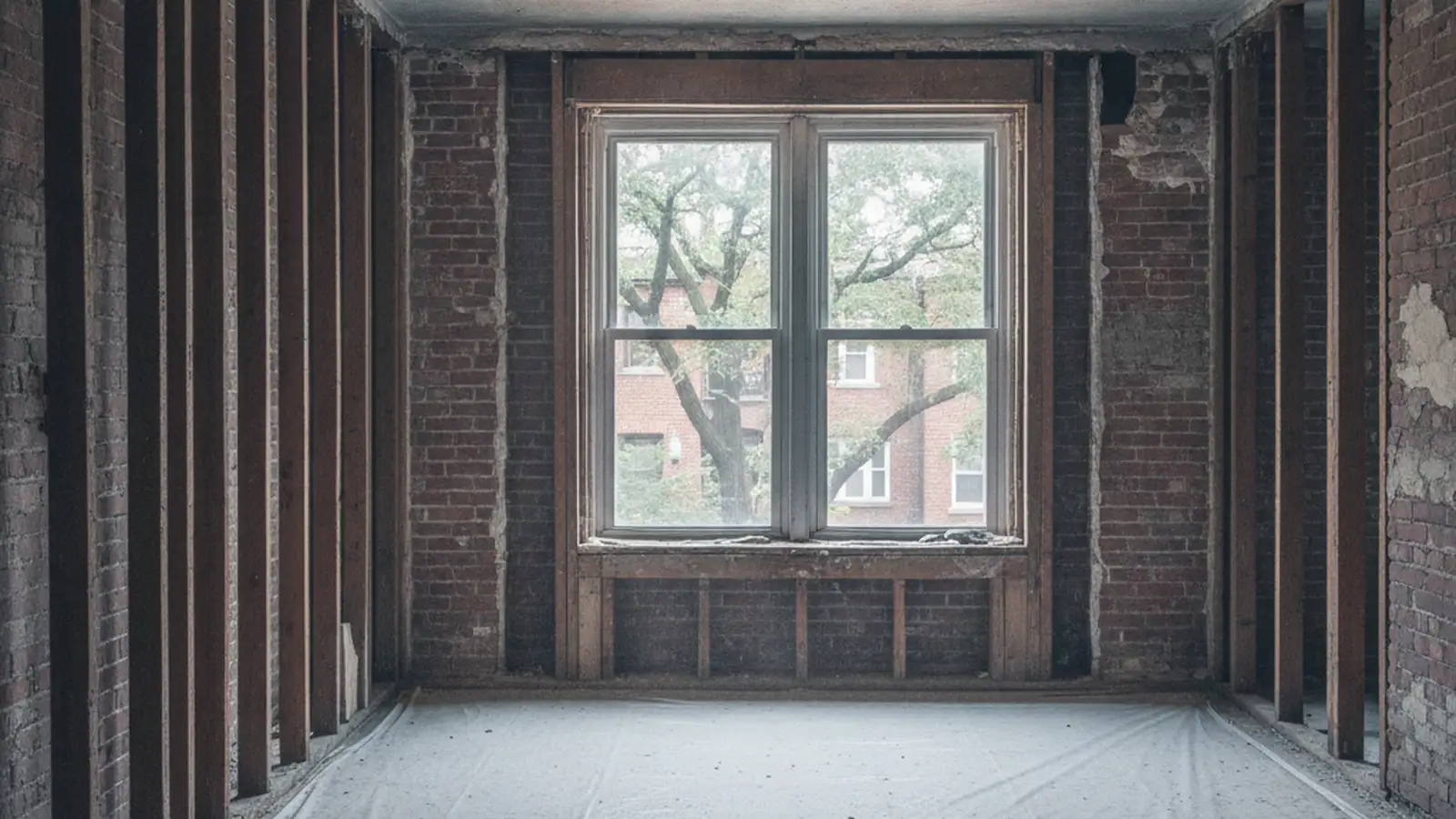
In Queens that usually means drywall or plaster off studs, partition walls, dropped ceilings, kitchens and bathrooms, floors and the sleepers under them, millwork, and redundant pipe and wire. It can mean a two-family house taken back to the studs, a co-op apartment opened to its joists, a garden-apartment unit gutted between tenants, or a storefront under the train taken down to the slab.
What stays is the structure, the facade, the windows, the risers, and anything you tell us is staying. We mark all of it out with you before we start rather than working from a drawing alone, because in an older house the drawing and the wall rarely agree.
Partial is normal. Not every job is a full gut. Taking out one kitchen and a bathroom in a house the family is still living in is a real scope and we treat it as one. In the trade this is called selective demolition, and it is most of the interior work in this borough.
01 Debris
The material still has to leave the building
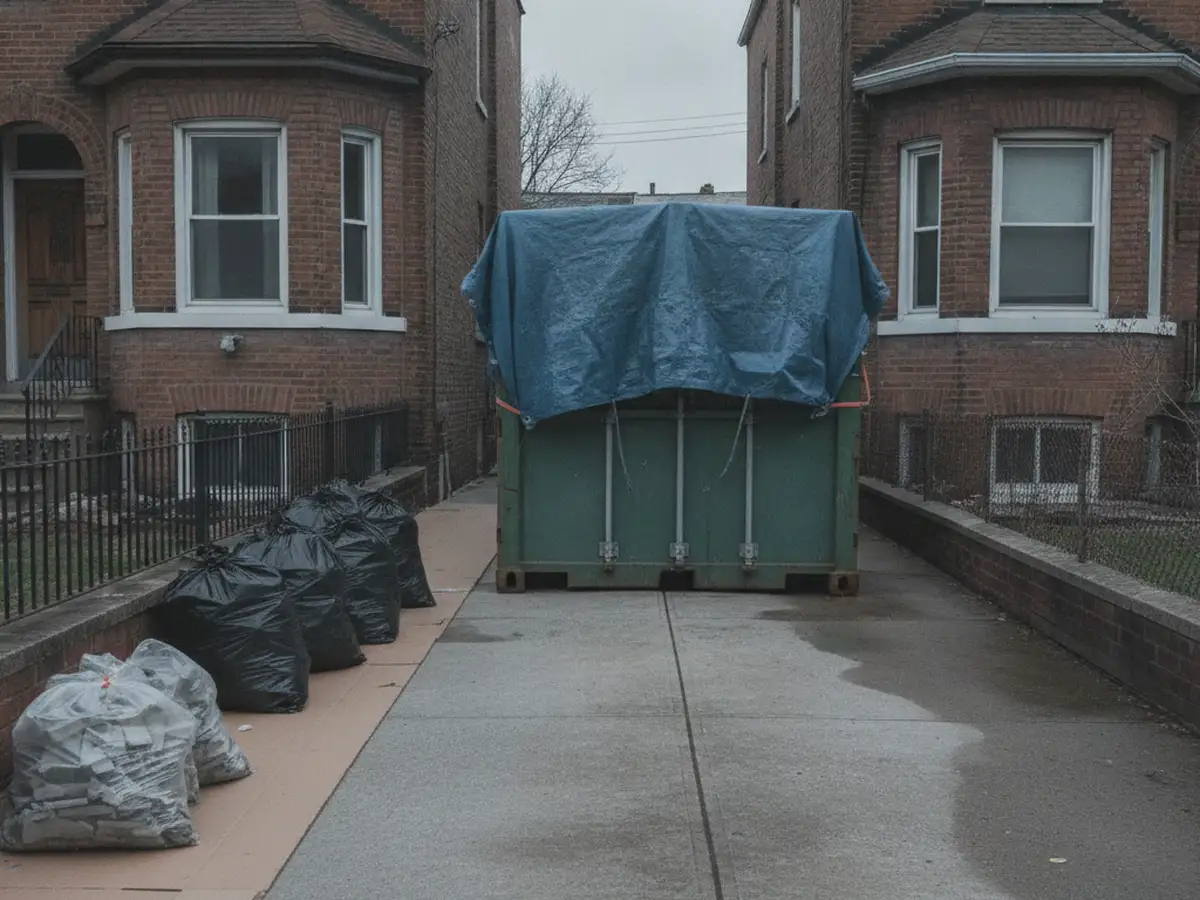
Demolition is roughly half taking things apart and half moving them. In a house with a driveway the second half is the easy one, and that is a large part of why the same job costs less in Queens than across the river.
In a co-op tower or a pre-war building it is the hard half. We work out the route out before we start: which windows management will release the service elevator for, how the cab gets protected, where a container can legally sit, and how much can leave in a day. Debris gets broken down, bagged, staged inside the work area on protected floor, then moved out in those windows and carted away by a registered carting company. It never sits in the lobby or the hall.
Where a building only gives us the elevator for two hours in the morning, that limit sets the pace of the whole job, and we build the schedule around it instead of discovering it in week two.
Before the first wall
For most Queens buildings, two things sit ahead of the work.
If the building went up before 1 April 1987, and your job needs a Department of Buildings permit, an asbestos assessment has to be filed before that permit is issued. A DEP certified asbestos investigator inspects the areas the work will disturb and files Form ACP-5. Most of the borough's houses and all of its pre-war stock predate that cutoff, so plan for this rather than hoping it does not apply.
Second, the hours. Construction work runs 7:00 AM to 6:00 PM on weekdays. Outside that window you need an After Hours Variance, filed a few business days ahead. A co-op will usually set narrower hours than the city does, and in a full building it usually should.
We will tell you which of these your job triggers on the first call. The full sequence is here.
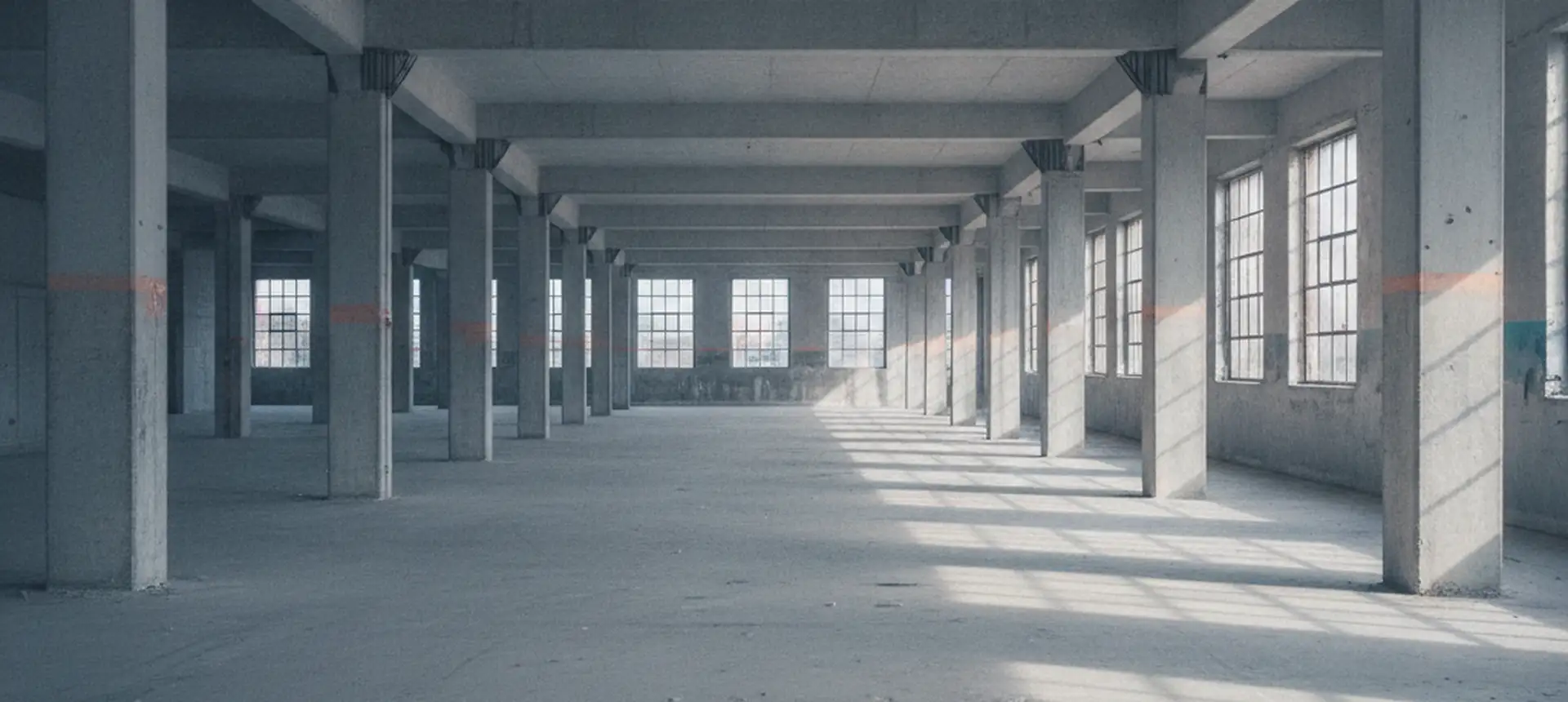
A stripped commercial floor
How we work in a live building
Protection first
Hall, stair, floors, door frames, and the lobby and elevator cab where there is one, get covered before anything comes down. It is faster to protect a cab than to repair one.
Dust control
Openings sealed, negative pressure where it is warranted, and cutting kept wet where the material allows it. The family downstairs notices dust long before they notice noise.
Noise in windows
The loud work gets grouped and run inside the hours the building and the city allow, so it is predictable for everyone in the house or the stack.
Daily clear-down
The space is left safe and swept at the end of each day. Nothing is stored in a hall, a stair or the lobby overnight, and the container is covered.
Common questions
What is interior demolition?
Interior demolition means taking out the inside of a building while the building itself stays up. Walls, ceilings, floors, fittings, and services come out. The structure, the facade and usually the windows stay.
It is what most people mean when they say they need a space gutted before a fit-out or a renovation.
What is the average cost for interior demolition?
There is no useful average, because the same square footage can differ several times over in price.
A drywall two-family with a container in the driveway is straightforward. The same area of plaster on lath on the twelfth floor of a co-op tower, leaving through a booked service elevator two hours a day, with parquet and sleepers to lift, is a much larger job.
What we can do is give you a real number quickly. We walk the space, price the actual scope, and tell you which parts could move once the plaster is off. Tell us your date when you call and we will tell you what we can hold.
Do I need an asbestos assessment before interior demolition can start?
If your building was built before 1 April 1987 and the work needs a Department of Buildings permit, then yes, one has to be filed before the permit is issued.
A DEP certified asbestos investigator does the inspection and files Form ACP-5 with the Department of Environmental Protection. If material is present but sits under the DEP thresholds and will not be disturbed, the ACP-5 can still be issued.
This is the customer's own filing rather than part of a demolition contract, and it is worth starting early, because the permit waits on it.
What hours can demolition work happen in New York City?
Construction work may be carried out from 7:00 AM to 6:00 PM on weekdays.
Anything before 7:00 AM, after 6:00 PM, or on a Saturday or Sunday needs an After Hours Variance from the Department of Buildings. It has to be filed a few business days before the first day of work and can cover days inside a fourteen day window.
Your building may also set its own hours that are narrower than the city's, and a co-op with a hundred households usually does. Where the two differ, the building's rules are the ones that decide your schedule.
What happens to the debris?
Clearing it is part of the job.
In a house, material goes straight to a covered container in the driveway, off the street, which removes the permit and most of the argument. In an apartment building we break the material down, bag or bundle it, and move it out in the elevator windows the building gives us, down to the loading point ready to go. Carting off site is done by a registered carting company, and we coordinate it so the two halves line up. Where a container has to sit at the curb, its placement has its own rules about where and how long, and that gets worked out before it arrives.
You get the space back swept and clear.